A few older investigations have explored the value of combination drug therapy for the healing of GERD. The great efficacy of the PPIs used as single agents in this condition has discouraged investigators from undertaking new studies on combination therapy. Drug combinations that have been studied have included an H2 blocker plus either sucralfate or a prokinetic agent. Cimetidine (1200 mg/d) combined with sucralfate (5 g/d) was found to be superior to cimetidine alone for relieving daytime heartburn and for improving the endoscopic signs of esophagitis. For patients unresponsive to treatment with cimetidine alone, the addition of metoclopramide resulted in symptomatic improvement significantly more often than the addition of placebo, but side effects of metoclopramide were frequent. A combination of ranitidine (300 mg/d) plus metoclopramide (40 mg/d) was not found to be as effective as omeprazole alone (20 mg/d) in healing the signs and symptoms of esophagitis. Some studies explored combination therapy with the prokinetic agent cisapride, but these studies are of historical interest only because cisapride has been withdrawn from general use due to serious side effects (lethal arryhythmias). For patients with moderately severe reflux esophagitis, the use of combination therapy may eliminate the need for treatment with a PPI. However, the addition of a second medication increases the cost of therapy and the potential for side effects. Furthermore, the long-term benefit of combination therapy has not been demonstrated. For patients who are refractory to single-agent therapy (with an H2 blocker, sucralfate, or a prokinetic), a change to a PPI generally is more likely to effect healing than the addition of a second drug.
Thursday, June 5, 2008
 Acid Reflux Relief : Combination Therapy

Thursday, September 27, 2007
The role of saliva in acid reflux relief
What about chewing gums for acid reflux relief?
The importance of saliva in acid reflux relief can be predicted by considering a scenario where an individual is about to vomit. Vomit contains gastric substances which are extremely acidic and injurious. A protective reflex occurs before the individual prepares to vomit. Signals are sent from the brain to the salivary glands via the involuntary nervous system to cause increased saliva secretion, even before vomiting occurs. Thus, when vomiting does occur, there is already saliva available for acting to minimize the acidity and thus prevent tissue destruction.
Saliva is formed mainly in the major glands of the parotid, submandibular, and sublingual, as well as minor glands. The constituents of saliva are mediators of its various functions and effects in relation to acid reflux relief. As saliva is a viscous liquid mainly composed of water and containing mucin; one of its important functions is acting as a lubricant for the passage of food into the esophagus, moistening food and helping to create a food bolus, so it can be swallowed easily. Diminished salivary production deprives the swallowed food bolus of its water content and the lubricant effect of mucin, it would thus be irritating to the esophageal lining.
Saliva contains all the ions usually present in body fluids, and of these, bicarbonate ions which play a major role in determining the pH and buffering capacity of saliva. The primary salivary buffer is composed of bicarbonate (HCO3-). Bicarbonate is excreted through the duct system by means of an active transport mechanism. Salivary bicarbonate can help protect the esophgus against attack from refluxed acid produced by the stomach. This buffer system forms the first line of defense against acidic challenges, a salivary function of utmost importance in esophageal clearance and acid reflux relief.
Salivary responses to chewing and taste stimuli are innate. Salivary flow increases during eating. The physical action of chewing stimulates nerve endings in the tissues around the teeth. Flavorful substances stimulate taste buds. Both of these stimuli are potent initiators of salivary flow. Signals from nerve endings in the mouth evoke salivation by exciting the salivary centers in the brain stem. Salivary secretion is controlled by the autonomic nervous system. The importance of chewing and avoiding medications that affect the involuntary nervous system is thus quite clear for acid reflux relief. Smoking is also a known factor in the causation of dry mouth and should be stopped.
Secretion of the salivary glands is 1-1.5 liters daily. When salivary flow is too low, dry mouth (xerostomia) may result. Here, normal oral functions such as chewing and swallowing can be uncomfortable and difficult to perform and acid reflux is aggravated.
Emotional disturbances affect the rate of salivary secretion leading to xerostomia. A lowered rate of flow has been noted in patients suffering from depression. However, most xerostomia is due to medications used in the management of these problems. Again, these factors should be considered for proper management of acid reflux.
Friday, August 31, 2007
The role of Antacids in acid reflux relief
What about Tums for acid reflux relief?
Acid produced in the stomach is the main injurious factor inducing inflammation of the esophagus in acid reflux disease. Since Antacids are medicines that neutralize stomach acid, the refluxed contents would thus be free of the heartburn initiating component. Antacids have a rapid onset and short duration of action, and are most appropriate for rapid acid reflux relief for a short period of time. In contrast to H-2 receptor blockers and proton pump inhibitors which reduce acid production by the stomach, Antacids have no direct effect upon acid producing mechanisms. There are two types of Antacids: the first is sodium bicarbonate which chemically neutralizes the acid and is absorbable, accordingly its use is limited because of the associated systemic side effects. The second type is non-absorbable and acts by attracting acid molecules to its surface, consequently preventing their action, a process called adsorption. Calcium and magnesium salts are examples of the second group and are commonly used.
Acid rebound is a phenomenon encountered during the usage of antacids in which acid returns in greater concentration after the drug effect has stopped.
Another disadvantage of Antacids is that they interact with certain drugs and limit their simultaneous usage. They may also be associted with diarrhea and constipation.
Additional components of some formulations include dimethicone which reduces pain resulting from gaseous distention and alginic acid which, in combination with antacids, may help manage acid reflux.
Additional uses of non-absorbable Antacids include prevention of osteoporosis as the calcium salts would act as dietary supplement. Aluminum carbonate is also useful for binding phosphate, preventing the formation of urinary phosphate stones.
Antacids should be taken when gastric acidity is most likely to be increasing — namely, between one and three hours after each meal and at bedtime.
Examples of Antacids include:
* Aluminum hydroxide (Amphojel®, AlternaGEL®)
* Magnesium hydroxide (Phillips’® Milk of Magnesia)
* Aluminum hydroxide and magnesium hydroxide (Maalox®, Mylanta®)
* Aluminum carbonate gel (Basaljel®)
* Calcium carbonate (Alcalak®, Calcium Rich Rolaids®, Quick-Eze®, Rennie®, Titralac®, Tums®)
* Sodium bicarbonate (Bicarbonate of soda, Alka-Seltzer®)
* Hydrotalcite (Mg6Al2(CO3)(OH)16 · 4(H2O); Talcid®)
* Bismuth subsalicylate (Pepto-Bismol)
* Magaldrate + Simethicone (Pepsil)
Reduced stomach acidity may result in an impaired ability to digest and absorb certain nutrients, such as iron and the B vitamins. Since the normal acidity of the stomach normally kills ingested bacteria, Antacids increase the vulnerability to infection.
Related Posts:
The role of H2 receptor blockers in acid reflux relief
The role of Proton Pump Inhibitors in acid reflux relief
Friday, August 17, 2007
The role of H2 receptor blockers in acid reflux relief
Reflux of stomach contents into the esophagus is known to produce inflammatory changes in the esophageal lining. There are two components in that content responsible for such a damage. These are the hydrochloric acid and a biologically active substance called pepsin, an enzyme which digests protein. Both of acid and pepsin contribute to esophagitis. Inside the stomach acid is mainly produced to activate pepsin from a precursor known as pepsinogen. That reveals the dual effect of the stomach acid in relation to esophageal damage. The first effect being direct and the second indirect through the activation of pepsin which in turn irritates the esophagus.
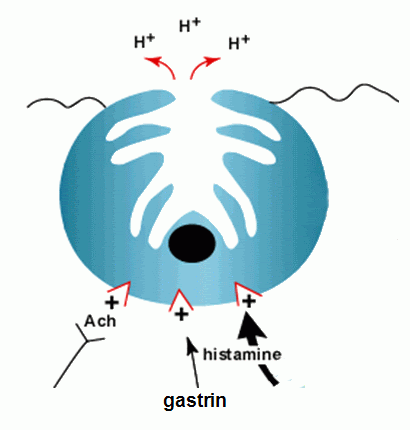
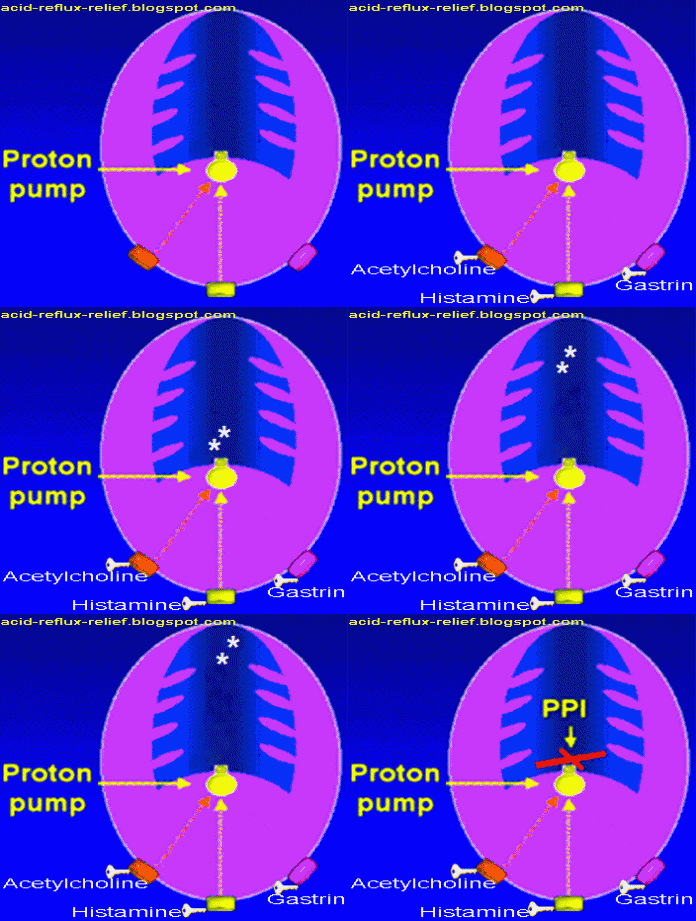
It is well evident from the previous facts that reduction of acid production prevents damage of the esophageal lining. Acid is produced by cells lining the stomach known as parietal cells. These cells have chemical pumps called proton pumps which moves hydrogen ion from the inside of the parietal cell into the stomach lumen against a concentration gradient. Before this pumping activity the cell responds to signals initiating the process. These signals are: 1- Acetylcholine, a chemical substance released at the nerve endings supplying stomach glands, 2- Gastrin: a local hormone released from capillaries adjacent to stomach glands, and 3- Histamine: a biologically active chemical produced by specialized local cells in the stomach wall. These signals act upon specific sites in the membrane enclosing each parietal cell called receptors and each receptor is named after the name of stimulus which acts upon. Accordingly there are Aceylcholine, Gastrin and histamine receptors.
Acetylcholine is released through the various neurological mechanisms which follow food intake and its digestion. Gastrin is a local hormone produced by G cells located in the wall of the distal part of the stomach called the antrum in response to the chemical effect of digested proteins. Histamine is released mechanically by distention of the stomach and chemically by products of protein breakdown.
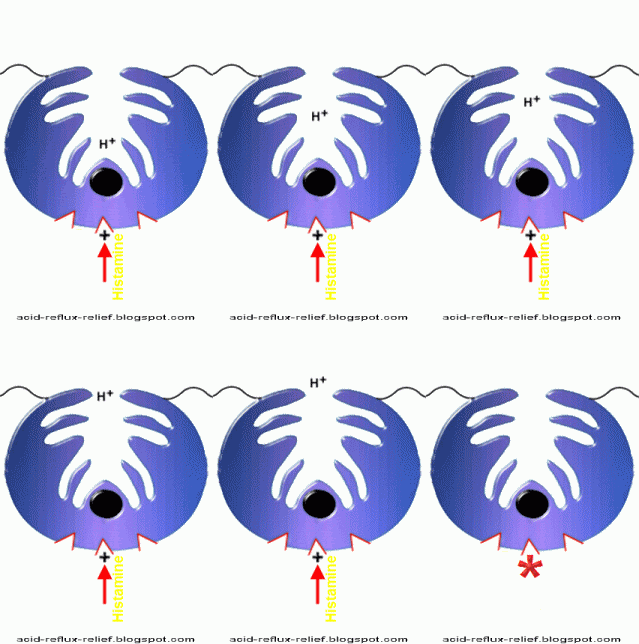
Theoretically speaking, we can block acid production by preventing the stimulatory effect of Acetylcholine, Gastrin and Histamine upon the parietal cells. Acetylcholine has well known antagonists but they have generalized effects as Acetylcholine is a universal neuro-transmitter. So far no Gastrin blocker is yet available. In 1964 the role of histamine as a parietal cell stimulant was discovered, however the use of traditional antihhistamine did not reduce acid secretion. That led scientists to postulate the existence of two histamine receptors, the one acted upon by traditional antihistamines (H1) and the other residing in parietal cell wall (H2).
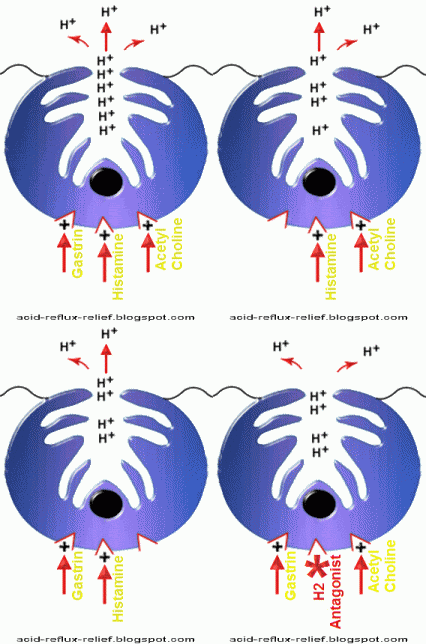
Examples of H2 receptor blockers include: Cimitedine (Tagamet),Ranitidine (Zantac), Nizatidine (Axid) and Famotidine (Pepcid).
They are equally effective, and the standard dose for mild to moderate acid reflux is: 400mg, 150mg, 150mg and 20mg respectively. This dosage is given twice daily for 6-12 weeks. Approximately 50% of patients with esophagitis heal on this regimen. However a high relapse rate of 50% has been reported within two months. Maintenance treatment is indicated in severe esophagitis associated with complications and if symptoms are relapsing immediately after treatment stops. The dosage may be given three times daily in some cases for proper relief of symptoms and healing of complications.
Generally speaking they are more effective than antacids but less effective than proton pump inhibitors.
Together with other measures for acid reflux relieve such as dietary control and lifestyle modifications, they have proven efficacy in mild to moderate symptoms. They are available as over the counter and prescription forms and have relatively lower cost.
Friday, July 27, 2007
How to achieve acid reflux relief without any medication?
Symptoms of acid reflux usually respond to dietary and lifestyle modifications. These changes in diet and lifestyle are meant to accomplish specific goals. The main guide to apply these measures is understanding the normal aspects of esophageal and stomach functioning in addition to the common causative mechanisms underlying acid reflux disease.
The following points will cover, in a process oriented action model, the reasons for most of the practices that should be adopted in the treatment of heartburn.
1- Assisting natural processes which promote acid clearance and stomach emptying
Increasing the production of saliva: saliva is produced by the salivary glands located around the mouth and have a high bicarbonate content and therefore an alkaline reaction. One of the functions of saliva is to neutralize the acid accidentally refluxed into the esophagus. Smoking and salty snacks reduce saliva and contribute to heartburn, they should therefore be avoided. At the same time, chewing gum should be encouraged as a good habit for heartburn sufferers who complain of dryness of the mouth.
Chewing thoroughly: mechanical degradation of food is an important preparatory step prior to digestion as it prepares food for further digestion in the stomach. Eating quickly is a bad habit that results in large food particles which imposes more work activity upon the stomach in the form of increased motility and increased acid production. It thus stays for a longer time in the stomach and delays its emptying. all these factors predispose to acid reflux and the habit of eating quickly should therefore be discouraged.
Small meals: a small meal would be digested easily with small amounts of acid and enzymes produced by the stomach. It is also cleared rapidly and does not increase pressure inside the stomach, consequently favorable circumstances for reflux are minimized. On the other hand a large meal is associated with increased production of acid, increased pressure and distension and delayed emptying of the stomach. all these factors initiate reflux and large meals should be avoided.
Drinking water: water dilutes and washes acid refluxed into the esophagus and promotes its clearance. At the same time it accelerates stomach emptying and prevents reflux. Drinking water should thus be encouraged before and after meals.
Pro-gravity postures: the erect posture favors movement of refluxed acid back into the stomach by the effect of gravity. On the contrary lying down is an anti-gravity posture, this fact should be considered together with our knowledge of the location of the esophagus, mainly within the chest (with negative pressure) and the location of the stomach, inside the abdomen (with positive pressure) these factors favor flow towards the esophagus and hinders esophageal clearance. Another factor related to posture is the increased tone of muscles supporting the lower esophageal sphincter in the upright position, this support is abolished when lying down as these muscles relax. Practically speaking recumbency should be avoided for at least 3 hours after eating, one should not go to bed immediately after meals and in heartburn sufferers the head of the bed should be elevated about 6 inches to prevent reflux.
Increasing lower esophageal sphincter pressure: from the functional point of view, high protein diet stimulates gastrin production, a local hormone that increases the sphincteric pressure and prevents reflux. Anatomically, a healthy physical built maintains an optimum tone in the muscles supporting the lower esophageal sphincter. It's well known that obesity weakens body musculature and reduces its contractility. Accordingly, we should maintain a desirable body weight and a low-calorie diet can be used to promote weight loss if needed. a high protein diet is also recommended.
Promoting stomach emptying: an important function regulating pressure inside the stomach and the amount of acid produced. Whenever emptying is delayed significantly food, acid and enzymes accumulate inside the stomach resulting in increased pressure and distention in addition to increased acid volume. The rate of stomach emptying is proportional to the rate of completion of digestion of a certain amount of food. Accordingly, when the digestive load is increased as following a heavy meal or swallowing large food particles or particularly when the meal is mostly composed of fat, a longer time is needed for digestion and consequently emptying is delayed. Drinking water also promotes stomach emptying. The role of having small meals, chewing thoroughly, low fat diet and drinking water before and after meals should be overstressed.
2- Eliminating factors that initiate reflux into esophagus
Direct irritation of the surface lining the esophageal lumen: avoid citrus,onions, spices and acids from tomatoes
Increased relaxation of the lower esophageal sphincter: avoid eating foods and drinking beverages that reduce sphincter pressure such as:
Beverages:
Caffeinated, carbonated or alcoholic beverages
Citrus-based juices
Food ingredients:
Vinegar, spices, garlic, onion, tomato-based products and peppermint
Vegetables: raw onion and tomatoes
Citrus fruits: orange, lemon, grapefruit
Fatty meals: salad dressing and fried food
Dairy products: sour cream, milk shake, ice cream and cottage cheese
Sweets and desserts: chocolate and potato chips
Medications: avoid medications that lower sphincteric pressure such as: Theophylline, Anticholinergics, Progesterone, Calcium channel blockers, Alpha adrenergic antagonists, Diazepam and Meperidine.
Increased acid production: avoid heavy meals, spices and alcohol.
Increased pressure inside the stomach: avoid practices associated with increasing pressure. These originate either from within the stomach (internal) or from the outside (external). Internal pressures are generated following delayed gastric emptying associated with heavy meals with high fat content or secondary to obstruction of the stomach outlet.
External pressures are mostly due to compressive forces associated with practicing exercise following meals especially vigorous exercise with bending movements. Tight clothing also exerts external compression upon the stomach and heartburn sufferers should wear loose-fitting clothing. Obesity is also considered a compressive factor as it increases the bulk of viscera inside the abdomen and weight loss should be encouraged.
To summarize, the best measures for acid reflux relief are:
Understanding normal functions of the esophagus and stomach.
Enhancing normal functional mechanisms.
Avoiding foods, medications, and lifestyle practices which disturb normal functions and cause acid reflux.
Related posts:
A special advice on fatty meals for acid reflux relief
What relieves symptoms of acid reflux?
Lifestyle changes can prevent reflux
Preventive measures for acid reflux relief: avoid smoking
Preventive measures for acid reflux relief: avoid alcohol
Monday, July 16, 2007
The role of Proton Pump Inhibitors in acid reflux relief
What are proton pump inhibitors?
A pump is a utility that moves a substance against a gradient.
A well known example is the water pump which lifts water up against gravity.
In our case, there are cells in the membrane lining the stomach lumen, these cells produce acid and pump it against the concentration gradient set by the previously formed acid into the stomach lumen.
That means the concentration of acid in the stomach lumen is higher than that inside the cell and this gradient would favor movement of acid into the cell; however the cellular wall prevents this and at the same time pumps more acid into the lumen.
Just like the water pump needs electric enrgy to lift water upwards; the cellular wall utilizes chemical energy to pump acid outwards.
Acid is produced in the form of a positively charged subatomic particle called proton. The proton is the nucleus of the lightest chemical element, hydrogen. Actually the hydrogen atom consists of a proton as the nucleus, to which a negatively charged single electron is bound as opposite charges attract. Because the proton is 1836 times heavier than the electron, the proton is considered to constitute almost the entire mass of the hydrogen atom.
So how proton pump inhibitors affect this mechanism?
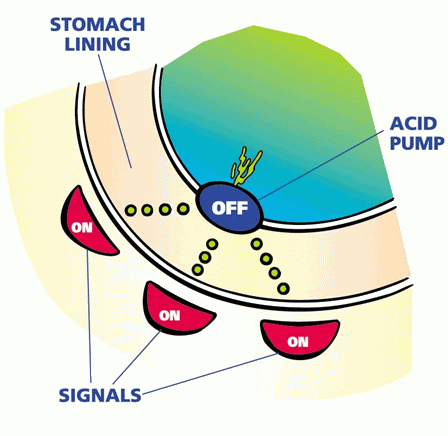
They accumulate on the luminal surface of the acid producing cells and inhibit the enzymes involved in the process of synthesis of chemical energy , essential for the pumping action.
Consequently; no energy, no pump activity and no acid production (no proton flow into the lumen of the stomach).
The above figure illustrates this cellular mechanism and also shows the receptor sites at which signals triggering acid secretion interact. These triggers are Histamine, Gastrin and Acetylcholine. They are chemical substances delivered around acid producing cells and are released from local cells, intestinal cells or nerve endings.
Examples of Proton Pump Inhibitors:
Omeprazole (Prilosec)
Lansoprazole (Prevacid)
Rabeprazole (Aciphex)
Pantaprazole (Protonix)
Esomeprazole (Nexium)
Proton Pump Inhibitors are used for both diagnosis and treatment. In the Omeprazole test: a dose of 40mg is given in the morning and another 20mg in the evening for 7days to a heartburn sufferer. If symptoms are relieved following this regimen, the diagnosis of acid reflux is confirmed. It is considered a noninvasive and easily available test with reasonable cost.
For acid reflux relief, they are considered the most effective agents and the standard medical therapy. All of them are effective but response may vary from patient to patient.Proper timing of intake is critical for efficacy, it should be 30minutes before breakfast or other large meal. For some patients with partial response or severe symptoms, the physician may advice a second additional dose before the evening meal. Being long acting (duration of action of a single dose is 24hours), they allow time for damaged tissues to heal. They have a healing rate of 80% in moderate to severe cases and relief of symptoms in up to 90% of patients. In comparison to Histamine type2 receptor antagonists, they are more effective and faster in promoting healing.
Saturday, July 14, 2007
What relieves symptoms of acid reflux?
Short term relief of acid reflux symptoms is easy. The problem is that the disease relapses, and many sufferers will require long term management.
There are general considerations that should be applied. These include: reducing acid, enhancing esophageal clearance and correcting anatomical or physiological defects.
Antacids are used for short term relieve only. H2 blockers are also effective. Proton pump inhibitors have become the mainstay in acid reflux treatment. They could be used effectively for continuous therapy in complicated cases.
Enhancing clearance and promoting mucosal defense could be attempted by such drugs as: Prokinetics, Alginates, Antacids and Mucosal protectants. These trials are practically not convincing.
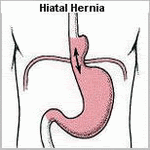
Correcting anatomical or physiological defects as Hiatal Henia and lower esophageal sphincter incompetence should be considered following diagnosis of these problems. The commonly used operation is Fundoplication. The hernia is reduced, the normal position of the sphincter is restored and consequently lower esophageal sphincter competence is reinforced. However, some complications may follow this operation such as difficulty in swallowing and inability to belch or vomit. The results would be much better with good selection of patients.
Related posts:
How to achieve acid reflux relief without any medication?
The role of Proton Pump Inhibitors in acid reflux relief
Achieving acid reflux relief with surgery
Wednesday, July 11, 2007
Preventive measures for acid reflux relief: avoid smoking
Why does smoking aggravates acid reflux symptoms?
Smoking reduces the production of saliva which neutralizes acid, at the same time it increases acid secretion, in addition to these factors related to acid; smoking would increase relaxation of the lower esophageal sphincter.
Related posts:
How to achieve acid reflux relief without any medication?
Sunday, July 8, 2007
Preventive measures for acid reflux relief: avoid alcohol
Why does alcohol increase acid reflux?
Alcohol would augment acid production and increase sensitivity of the esophagus to acid.
In addition it increases relaxation of the lower esophageal sphincter and disturbs motility of the esophagus.
Related posts:
How to achieve acid reflux relief without any medication?

