What about Tums for acid reflux relief?
Acid produced in the stomach is the main injurious factor inducing inflammation of the esophagus in acid reflux disease. Since Antacids are medicines that neutralize stomach acid, the refluxed contents would thus be free of the heartburn initiating component. Antacids have a rapid onset and short duration of action, and are most appropriate for rapid acid reflux relief for a short period of time. In contrast to H-2 receptor blockers and proton pump inhibitors which reduce acid production by the stomach, Antacids have no direct effect upon acid producing mechanisms. There are two types of Antacids: the first is sodium bicarbonate which chemically neutralizes the acid and is absorbable, accordingly its use is limited because of the associated systemic side effects. The second type is non-absorbable and acts by attracting acid molecules to its surface, consequently preventing their action, a process called adsorption. Calcium and magnesium salts are examples of the second group and are commonly used.
Acid rebound is a phenomenon encountered during the usage of antacids in which acid returns in greater concentration after the drug effect has stopped.
Another disadvantage of Antacids is that they interact with certain drugs and limit their simultaneous usage. They may also be associted with diarrhea and constipation.
Additional components of some formulations include dimethicone which reduces pain resulting from gaseous distention and alginic acid which, in combination with antacids, may help manage acid reflux.
Additional uses of non-absorbable Antacids include prevention of osteoporosis as the calcium salts would act as dietary supplement. Aluminum carbonate is also useful for binding phosphate, preventing the formation of urinary phosphate stones.
Antacids should be taken when gastric acidity is most likely to be increasing — namely, between one and three hours after each meal and at bedtime.
Examples of Antacids include:
* Aluminum hydroxide (Amphojel®, AlternaGEL®)
* Magnesium hydroxide (Phillips’® Milk of Magnesia)
* Aluminum hydroxide and magnesium hydroxide (Maalox®, Mylanta®)
* Aluminum carbonate gel (Basaljel®)
* Calcium carbonate (Alcalak®, Calcium Rich Rolaids®, Quick-Eze®, Rennie®, Titralac®, Tums®)
* Sodium bicarbonate (Bicarbonate of soda, Alka-Seltzer®)
* Hydrotalcite (Mg6Al2(CO3)(OH)16 · 4(H2O); Talcid®)
* Bismuth subsalicylate (Pepto-Bismol)
* Magaldrate + Simethicone (Pepsil)
Reduced stomach acidity may result in an impaired ability to digest and absorb certain nutrients, such as iron and the B vitamins. Since the normal acidity of the stomach normally kills ingested bacteria, Antacids increase the vulnerability to infection.
Related Posts:
The role of H2 receptor blockers in acid reflux relief
The role of Proton Pump Inhibitors in acid reflux relief
Friday, August 31, 2007
 The role of Antacids in acid reflux relief

Friday, August 17, 2007
The role of H2 receptor blockers in acid reflux relief
Reflux of stomach contents into the esophagus is known to produce inflammatory changes in the esophageal lining. There are two components in that content responsible for such a damage. These are the hydrochloric acid and a biologically active substance called pepsin, an enzyme which digests protein. Both of acid and pepsin contribute to esophagitis. Inside the stomach acid is mainly produced to activate pepsin from a precursor known as pepsinogen. That reveals the dual effect of the stomach acid in relation to esophageal damage. The first effect being direct and the second indirect through the activation of pepsin which in turn irritates the esophagus.
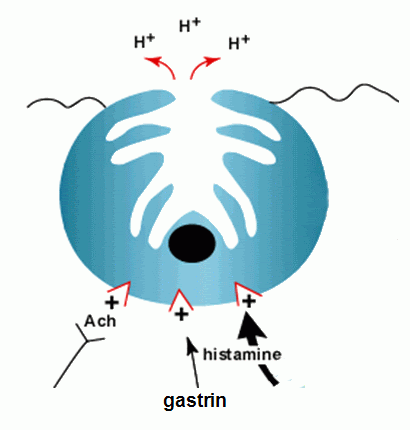
It is well evident from the previous facts that reduction of acid production prevents damage of the esophageal lining. Acid is produced by cells lining the stomach known as parietal cells. These cells have chemical pumps called proton pumps which moves hydrogen ion from the inside of the parietal cell into the stomach lumen against a concentration gradient. Before this pumping activity the cell responds to signals initiating the process. These signals are: 1- Acetylcholine, a chemical substance released at the nerve endings supplying stomach glands, 2- Gastrin: a local hormone released from capillaries adjacent to stomach glands, and 3- Histamine: a biologically active chemical produced by specialized local cells in the stomach wall. These signals act upon specific sites in the membrane enclosing each parietal cell called receptors and each receptor is named after the name of stimulus which acts upon. Accordingly there are Aceylcholine, Gastrin and histamine receptors.
Acetylcholine is released through the various neurological mechanisms which follow food intake and its digestion. Gastrin is a local hormone produced by G cells located in the wall of the distal part of the stomach called the antrum in response to the chemical effect of digested proteins. Histamine is released mechanically by distention of the stomach and chemically by products of protein breakdown.
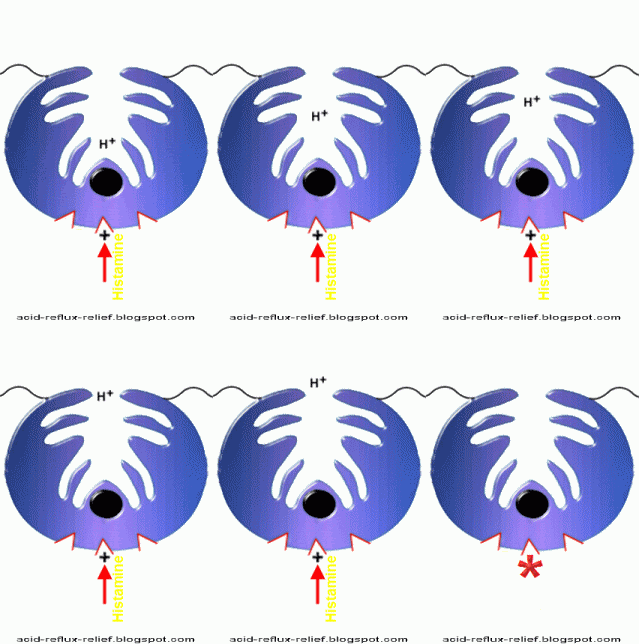
Theoretically speaking, we can block acid production by preventing the stimulatory effect of Acetylcholine, Gastrin and Histamine upon the parietal cells. Acetylcholine has well known antagonists but they have generalized effects as Acetylcholine is a universal neuro-transmitter. So far no Gastrin blocker is yet available. In 1964 the role of histamine as a parietal cell stimulant was discovered, however the use of traditional antihhistamine did not reduce acid secretion. That led scientists to postulate the existence of two histamine receptors, the one acted upon by traditional antihistamines (H1) and the other residing in parietal cell wall (H2).
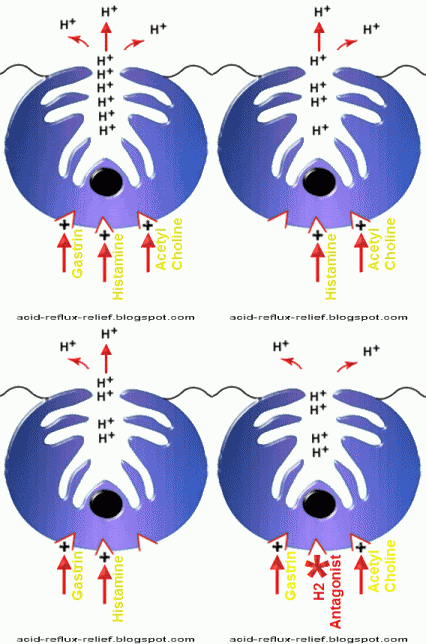
Examples of H2 receptor blockers include: Cimitedine (Tagamet),Ranitidine (Zantac), Nizatidine (Axid) and Famotidine (Pepcid).
They are equally effective, and the standard dose for mild to moderate acid reflux is: 400mg, 150mg, 150mg and 20mg respectively. This dosage is given twice daily for 6-12 weeks. Approximately 50% of patients with esophagitis heal on this regimen. However a high relapse rate of 50% has been reported within two months. Maintenance treatment is indicated in severe esophagitis associated with complications and if symptoms are relapsing immediately after treatment stops. The dosage may be given three times daily in some cases for proper relief of symptoms and healing of complications.
Generally speaking they are more effective than antacids but less effective than proton pump inhibitors.
Together with other measures for acid reflux relieve such as dietary control and lifestyle modifications, they have proven efficacy in mild to moderate symptoms. They are available as over the counter and prescription forms and have relatively lower cost.
Monday, July 16, 2007
The role of Proton Pump Inhibitors in acid reflux relief
What are proton pump inhibitors?
A pump is a utility that moves a substance against a gradient.
A well known example is the water pump which lifts water up against gravity.
In our case, there are cells in the membrane lining the stomach lumen, these cells produce acid and pump it against the concentration gradient set by the previously formed acid into the stomach lumen.
That means the concentration of acid in the stomach lumen is higher than that inside the cell and this gradient would favor movement of acid into the cell; however the cellular wall prevents this and at the same time pumps more acid into the lumen.
Just like the water pump needs electric enrgy to lift water upwards; the cellular wall utilizes chemical energy to pump acid outwards.
Acid is produced in the form of a positively charged subatomic particle called proton. The proton is the nucleus of the lightest chemical element, hydrogen. Actually the hydrogen atom consists of a proton as the nucleus, to which a negatively charged single electron is bound as opposite charges attract. Because the proton is 1836 times heavier than the electron, the proton is considered to constitute almost the entire mass of the hydrogen atom.
So how proton pump inhibitors affect this mechanism?
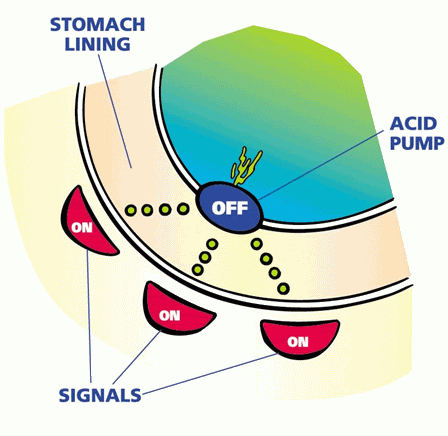
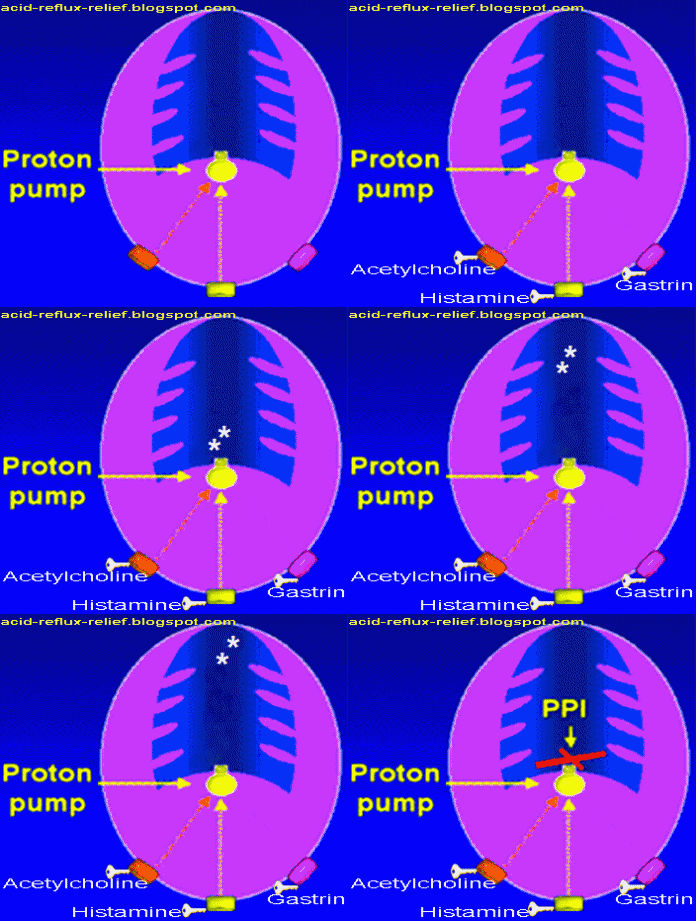
They accumulate on the luminal surface of the acid producing cells and inhibit the enzymes involved in the process of synthesis of chemical energy , essential for the pumping action.
Consequently; no energy, no pump activity and no acid production (no proton flow into the lumen of the stomach).
The above figure illustrates this cellular mechanism and also shows the receptor sites at which signals triggering acid secretion interact. These triggers are Histamine, Gastrin and Acetylcholine. They are chemical substances delivered around acid producing cells and are released from local cells, intestinal cells or nerve endings.
Examples of Proton Pump Inhibitors:
Omeprazole (Prilosec)
Lansoprazole (Prevacid)
Rabeprazole (Aciphex)
Pantaprazole (Protonix)
Esomeprazole (Nexium)
Proton Pump Inhibitors are used for both diagnosis and treatment. In the Omeprazole test: a dose of 40mg is given in the morning and another 20mg in the evening for 7days to a heartburn sufferer. If symptoms are relieved following this regimen, the diagnosis of acid reflux is confirmed. It is considered a noninvasive and easily available test with reasonable cost.
For acid reflux relief, they are considered the most effective agents and the standard medical therapy. All of them are effective but response may vary from patient to patient.Proper timing of intake is critical for efficacy, it should be 30minutes before breakfast or other large meal. For some patients with partial response or severe symptoms, the physician may advice a second additional dose before the evening meal. Being long acting (duration of action of a single dose is 24hours), they allow time for damaged tissues to heal. They have a healing rate of 80% in moderate to severe cases and relief of symptoms in up to 90% of patients. In comparison to Histamine type2 receptor antagonists, they are more effective and faster in promoting healing.
Thursday, July 12, 2007
Esophageal defenses against reflux
With all these normal daily activities that would trigger regurgitation, the esophagus seems to be highly exposed to reflux?
Actually the esophagus has many defenses against acid reflux and its consequences. Anatomical barriers in the form of muscles inside and outside(diaphragmatic) the wall of the esophagus enforce its lower sphincter to prevent reflux. Acid clearance from the lumen of the esophagus is mechanically assisted by gravity and its propulsive movement towards the stomach. Acid is chemically antagonized by saliva and the esophageal gland secretion.
The third mechanism against reflux is tissue resistance. It includes the bicarbonate content of the glandular secretions on the surface of the esophagus; the tight junctions between cells lining its lumen and the normal blood flow in the wall of the esophagus.
These defenses would be efficient only in cases of mild infrequent reflux.
Sunday, July 8, 2007
Preventive measures for acid reflux relief: avoid alcohol
Why does alcohol increase acid reflux?
Alcohol would augment acid production and increase sensitivity of the esophagus to acid.
In addition it increases relaxation of the lower esophageal sphincter and disturbs motility of the esophagus.
Related posts:
How to achieve acid reflux relief without any medication?
Saturday, July 7, 2007
Acid production in the stomach
But acid is normally produced in the stomach without heartburn?
Yes; the stomach is full of acid; but is built to handle it and is protected by a specialized barrier of mucus and cell wall. The esophagus on the other hand is not well protected from the injurious effect of acid and results in a burning sensation when acid regurgitates into the esophagus.
Friday, July 6, 2007
Constituents of the reflux
Is it only the acid produced by the stomach that causes heartburn?
Not only the acid is responsible for damage in the lining surface of the esophageal lumen. Other factors include: Pepsin, the digestive enzyme also produced in the stomach that digests protein in the diet; Bile acids, detergents excreted by the liver into the small intestine to digest fat; and proteases, digestive enzymes produced by the pancreas that further digest dietary protein.
Pepsin significantly damages the esophagus.
Bile acids also can cause damage especially when acid secretion is suppressed.
A mixture of acid and bile reflux was found to be more aggressive to the esophagus than acid alone.
These contents of the small intestine reflux into the stomach and then up into the esophagus.
It's important to counteract the effects of these chemical factors by various measures in order to achieve acid reflux relief.

